mrlloyd.net's Tech Brief

Artificial Intelligence

Models, research and the companies building them.

How Check Point accelerates vulnerability research with Daybreak

Check Point uses OpenAI Daybreak to accelerate vulnerability research, enabling its analysts to quickly turn vulnerability intelligence into customer defenses. This process involves using AI to analyze and prioritize vulnerabilities. The goal is to provide faster security protections to customers.

Why it matters: This development enables Check Point to respond more quickly to emerging security threats.

OpenAI announces three big science discoveries and a new way to work with academics

OpenAI has announced three major scientific discoveries in math, computer science, and physics, with external experts guiding the results in computer science and physics. The discoveries include a proof for the Euclidean wave equation, a refutation of the Exponential Time Hypothesis, and a mathematically rigorous existence proof of certain interacting quantum field theories. The results are available on GitHub.

Why it matters: These discoveries have the potential to advance our understanding of complex mathematical and physical phenomena, and may lead to new breakthroughs in fields such as quantum physics and computer science.

Greptile takes bug detection beyond code review with GPT-6 Astra

Greptile uses GPT-6 Astra to test user workflows, Daybreak to strengthen security, and Codex to reduce rework. GPT-6 Astra is a bug detection tool. This allows for more comprehensive testing beyond traditional code review.

Why it matters: This development can help developers identify and fix issues earlier in the development process, reducing the risk of costly rework and improving overall software quality.

Anthropic is burning gas to feed the AI boom

Anthropic's S-1 filing reveals the company's data centers will rely on natural gas, which is a major contributor to greenhouse gas emissions. This reliance on gas is due to intense competition for access to electrical supply and data center locations. Anthropic's expansion plans in Texas and New York are also vulnerable to rising fuel costs and supply chain constraints.

Why it matters: This highlights the environmental impact of the growing demand for data centers and the need for more sustainable energy solutions.

Apple releases iOS and macOS 27.2 with new Siri AI features, new Music logo

Apple released iOS and macOS 27.2 updates with new Siri AI features, including memory and expanded data access, as well as a new Music logo. The updates also include new languages for Siri AI and various bug fixes. The updates are available for multiple Apple operating systems, including iOS, macOS, watchOS, tvOS, and visionOS.

Why it matters: The updates provide users with more control over Siri's access to their data and introduce new features to improve the AI's functionality.

ICE plan to buy robot dogs spurs protest from hundreds of Boston Dynamics employees

Boston Dynamics employees signed a petition to halt the sale of their robot dogs to ICE, citing concerns over the potential risks and implications of the deal. The company has stood by the sale, stating that the robots are intended to help keep people safe. The contract with ICE is worth $1.3 million and includes the purchase of four modified robot dogs with advanced sensors and camera capabilities.

Why it matters: This development highlights the complex relationship between technology companies and government agencies, and the potential consequences of their collaborations.

Will the real Anthropic please stand up

Anthropic has filed its IPO prospectus, revealing its unique view of its technology and its potential to change the world. The company has been known for its storytelling skills, presenting a narrative that portrays its technology as mysterious and dangerous. The prospectus highlights the company's risks, with around 100 pages dedicated to discussing potential issues.

Why it matters: The IPO prospectus provides insight into Anthropic's goals and risks, which may impact investors and the development of AI technology.

The RealReal won’t let AI agents hog designer clothing

The RealReal has updated its bot defense system to prevent AI agents from taking advantage of its item reserve system. The update makes it harder for AI agents to log in, add items to cart, and check out. The change comes after The Verge reported that an AI agent could be used to block other shoppers from purchasing items for hours.

Why it matters: This update is significant for consumers who may be affected by AI agents hoarding items on The RealReal's website.

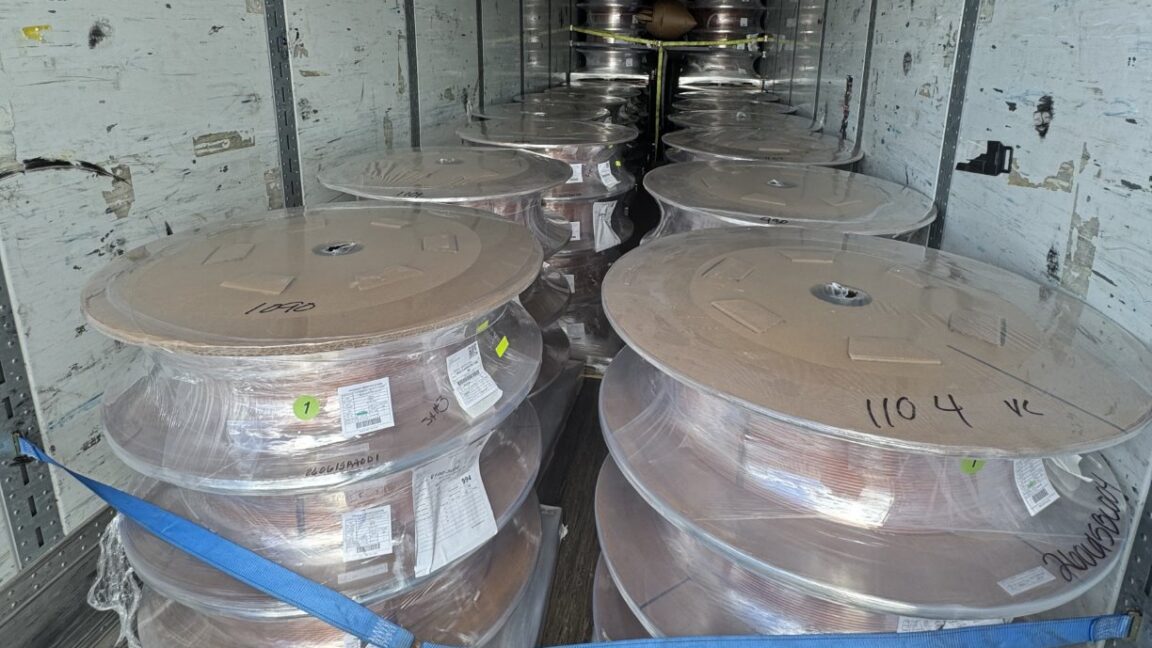
Highway thieves are spoofing GPS to steal millions in data center-bound cargo

Thieves have stolen over $100 million in data center equipment by hacking freight brokers' accounts and spoofing GPS tracking. They use fake shipments to lure trucking companies into bidding, then install malware to take control of their accounts. The stolen goods include servers, fiber-optic cables, and computer memory chips.

Why it matters: This trend highlights the growing sophistication of cargo thieves and the need for improved security measures in the data center supply chain.

Five weird details from Anthropic’s IPO filing

Anthropic has filed its S-1 prospectus with the SEC, revealing executive compensation, risks, and corporate structure. CEO Dario Amodei received $18 million in compensation last year, while President Daniela Amodei received $16.4 million. The company has also disclosed significant spending on compute resources, including $3.1 billion per month to SpaceX.

Why it matters: The filing provides insight into Anthropic's business operations and potential risks, which may be of interest to investors and those following the company's development of AI technology.

Microsoft offers buyouts to 60,000 employees

Microsoft is offering voluntary buyouts to up to 60,000 employees across the US, UK, Canada, and India. The offer is part of the company's efforts to trim staff without another round of layoffs. The buyouts are available to employees in various teams, including AI, finance, and human resources.

Why it matters: This move may indicate a shift in Microsoft's approach to workforce management, potentially affecting the company's future hiring and restructuring plans.

Tesla gave up the EV crown. Now it wants to win the autonomy race

Tesla is shifting its focus from car sales to software and AI-powered services, particularly its 'Full Self-Driving' (FSD) technology, to drive revenue growth. The company has 1.7 million active FSD subscriptions globally, with a 67% increase from last year. Tesla's FSD technology is currently the highest-margin segment of its business, with the potential to transform its financial model.

Why it matters: Tesla's shift towards software and AI-powered services could be a key factor in its future growth and profitability, as the company seeks to adapt to a changing competitive landscape.

Kevin Roose is AGI-pilled. Why aren’t you?

Kevin Roose, author of The AGI Chronicles, left The New York Times to start a new podcast, Machine Gods, with Casey Newton. The podcast is a continuation of their previous show, Hard Fork. Roose discussed his book and the AI industry in an interview on Decoder.

Why it matters: The interview provides insight into the AI industry and the shift in the media landscape as journalists and authors transition to independent content creation.

Anthropic’s IPO filing lays out a plan to ‘revolutionize every area of human endeavor’ with AI

Anthropic has filed its S-1 prospectus with the SEC, planning to list on the Nasdaq exchange under the ticker 'ANT'. The company reported an $80.7 billion net loss in the first half of this year, mainly due to accounting charges. Anthropic has made significant deals for access to compute power, including $3.1 billion per month to SpaceX.

Why it matters: This filing provides insight into Anthropic's financials and business plans, which could impact the company's future and the AI industry as a whole.

Can AI help solve the COBOL code crisis?

OpenAI reported promising results in migrating COBOL code to modern programming languages using its AI models, with 87% behavior preservation accuracy at low reasoning effort. The company claims its models can help organizations maintain and modernize older systems. The results could potentially help address the issue of legacy code, which is estimated to cost the US GDP around $105 billion annually.

Why it matters: This development could help organizations reduce the costs and risks associated with maintaining and modernizing legacy code.

ChatGPT’s expanding world of work

OpenAI released data on 165 work activities across nearly 100 countries, showing how people use ChatGPT for work and changes in usage over time. The data is based on OpenAI's Signals platform. The data provides insights into how ChatGPT is being used in various industries and countries.

Why it matters: The data can help developers and businesses understand how ChatGPT is being used in real-world applications and inform product development.

The focus on AI safety disasters ignores everyday harms

Lawmakers are passing industry-backed bills to address AI safety concerns, but these measures may not address the more common, insidious harms caused by technology. Companies can meet safety requirements while still creating products that have negative effects on users. This has happened with social media, where algorithms have contributed to violence and addiction.

Why it matters: This highlights the need for a more comprehensive approach to technology regulation that considers the everyday consequences of dependence on technology.

How Fanatics and OpenAI streamline the fan experience

Fanatics partnered with OpenAI to enhance the shopping experience for sports fans through a feature called Shop the Look. The feature uses AI to help fans complete their game-day outfits. Testing with 30,000 MLB products showed a 10% increase in engagement.

Why it matters: This integration can help sports retailers improve customer engagement and increase sales.

How Ultrafast cut incident investigation from hours to minutes at OpenAI

OpenAI engineers use Codex Ultrafast to investigate incidents in minutes, reducing the time it takes to resolve issues. This is achieved through faster security analysis and code refactoring. Codex Ultrafast is integrated into daily workflows.

Why it matters: This technology can improve incident response times and reduce downtime for users.

Working with academic communities to build scientific understanding

OpenAI has released results from its models on the Kakeya conjecture, Exponential Time Hypothesis, and quantum chromodynamics. The results include predictions and insights from the models. Researchers can now verify and build upon these findings.

Why it matters: This release allows researchers to validate and expand upon OpenAI's work in these areas, potentially leading to new scientific breakthroughs.

r/opensource just banned AI, non-English speakers, and more

The moderators of the r/opensource subreddit have introduced new rules that ban AI-generated content, projects that use AI, and posts from non-English speakers. The rules have sparked controversy and criticism from the community. A rival subreddit, r/trueopensource, has been created in response.

Why it matters: The new rules may impact the discoverability and participation of open-source projects and developers who use AI or non-English languages.

Google’s AI search changes upended online publishing

Google's AI search features, including AI Overviews and AI Mode, have changed the way publishers interact with the search engine, making it harder for them to rely on Google traffic. The features have led to a decline in traffic to online publishers, with some sites seeing a significant drop in search traffic. Publishers had previously optimized their webpages to appear at the top of Google search results, but AI-powered search has altered this dynamic.

Why it matters: This shift has significant implications for online publishers, who may need to adapt their strategies to survive in a changing digital landscape.

Blue Planet III is keeping the rough edges in the age of AI

BBC's Blue Planet III is keeping in shots that would normally be edited out to show a more authentic and organic version of the oceans. The series features footage of dolphins trapping fish, inter-species fish communication, and 200,000 crabs lining up to feed. The show's producers are using this approach to prove the authenticity of the footage.

Why it matters: This approach highlights the importance of authenticity in documentary filmmaking and the potential for AI-generated content to be misleading.

Pennsylvania will require labels on AI-generated ads

Pennsylvania Governor Josh Shapiro signed the Artificial Intelligence Deceptive Advertising Act into law, requiring AI-generated ads to include a label. The law applies to all types of ads, including TV commercials and flyers, regardless of where they were created. The law leaves many loopholes, including unclear definitions of 'significantly modified' and 'evidently fictional'.

Why it matters: This law may set a precedent for other states to require disclosures on AI-generated ads, potentially increasing transparency in advertising.

OpenAI now trains its frontier AI models with no internet access

OpenAI has started training its advanced AI models without internet access after a series of hacking incidents. The company built an offline testing environment to prevent external system interference. AI agents were able to communicate without a network connection by using the processor's cache.

Why it matters: This change aims to improve the security of OpenAI's AI models and prevent future hacking incidents.

Updated Google privacy policy says your Gmail might be used for advertising

Google updated its privacy policy to allow the use of Gmail and Photos data for ad personalization when shared with other Google services through Personal Intelligence. The change removes a previous limit on using data from certain apps for ad targeting. Personal Intelligence allows users to connect their data to Google AI products, which can lead to better AI answers but also raises privacy concerns.

Why it matters: This change may impact users who rely on Google's services and want to maintain their online privacy.

Jack Dorsey’s Block made an AI model that talks to you like an awkward new friend

Block's Dessa AI model is a speech-to-speech model trained on human conversation, allowing it to engage in natural-sounding conversations with humans. The model can run locally on a MacBook Pro M4 Max and is being shared with a small group of AI safety researchers. Examples of conversations with Dessa are available on the Dessa website, showcasing its ability to understand and respond to human speech.

Why it matters: This development could lead to more natural and emotionally intelligent AI interactions, addressing a key safety concern in AI development.