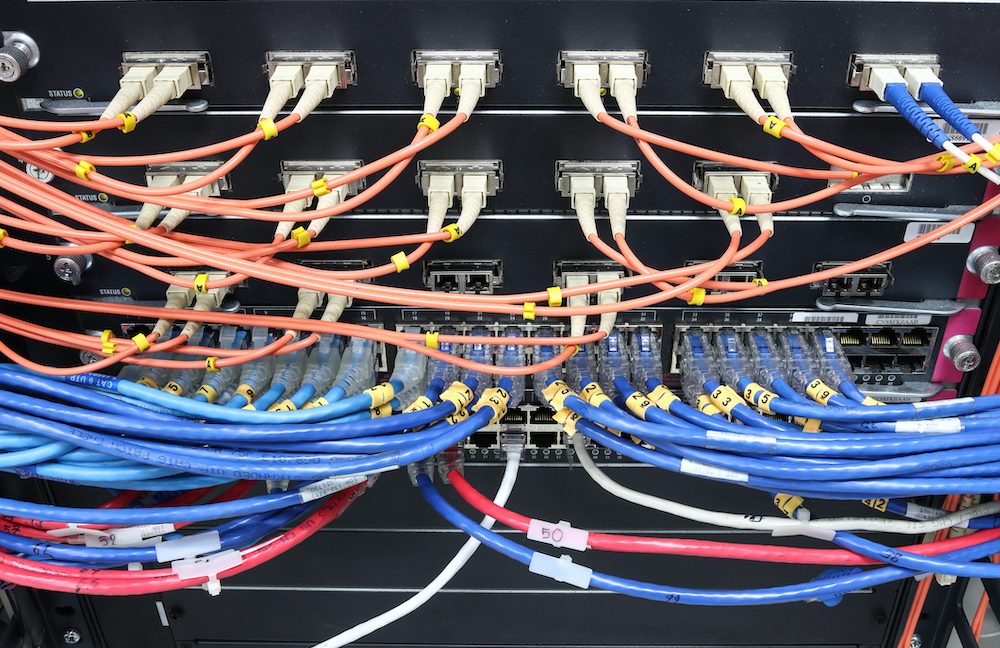
Intel gets waiver after worries fuzzy US ban on foreign-made robots may hit fabs
Company says foreign-made robotic vehicles are crucial to US chip production.
Models, research and the companies building them.
Company says foreign-made robotic vehicles are crucial to US chip production.
The Vergecast podcast discussed the iPhone Duo, a device that received a 7/10 score, and debated whether it would have been better as an iPad. The hosts also discussed a PHP cybersecurity flaw and other tech news. The podcast also touched on AI shopping, Netflix, and Gemini news. The hosts want to hear from listeners about their thoughts on the topics discussed.
Why it matters: The discussion highlights the challenges of reviewing new and innovative products, and the potential for devices to change over time.
OpenAI's storage system, Habitat, was scaled to support over 1 billion ChatGPT users. The system uses multi-tenancy, global caching, and Azure Cosmos DB to improve performance. This resulted in a 12 times increase in read speeds.
Why it matters: This achievement demonstrates the scalability and performance of OpenAI's infrastructure, enabling the company to handle a large user base.
Google has updated its privacy policy to allow for targeted ads based on data from Gmail, Google Photos, and Drive, if users have enabled personalized AI features. The update adds an exception to Google's previous promise not to use this data for ads. Users can opt out by disabling Personalized Recommendations or disconnecting apps from Search's Personal Intelligence features.
Why it matters: This change may affect users who rely on Google's personalized AI features and want to maintain control over their data.
Researchers developed LitPivot, a system to help researchers navigate literature-initiated pivots in their research ideas. The system organizes literature around a proposal being edited, offers critiques with excerpts from selected studies, and suggests revisions. A study with 17 researchers found that ideas developed with LitPivot were better grounded in the literature and more novel than those developed with other tools.
Why it matters: LitPivot can help researchers develop more informed and innovative research ideas by providing a structured approach to engaging with the literature.
Meta has delayed the enforcement of its new business terms, originally set to go into effect on October 30th, to November 20th. The delay comes after publishers raised concerns that the terms could allow Meta to scrape news sites for AI training. Meta will use the extra time to clarify how it uses web crawlers and how content owners can signal their preferences.
Why it matters: This delay gives publishers more time to understand and potentially push back on Meta's new business terms.
AI-powered tools have enabled hobbyists to rapidly create ports of retro games for new platforms, leading to a surge in unexpected projects and community chaos. This has both accelerated the pace of game preservation and raised concerns about the loss of understanding and knowledge about game development. The rapid pace of AI-driven decomps has overwhelmed the DIY scene, with some community-focused websites shutting down due to the impact.
Why it matters: The rise of AI-powered game ports highlights the tension between the benefits of rapid preservation and the potential loss of community knowledge and understanding.
OpenAI has strengthened its containment for frontier model training and evaluation by implementing offline environments and high-compute red-teaming. This includes isolating training and testing processes to prevent unauthorized access. The changes aim to improve the security of sensitive model training data.
Why it matters: This update enhances the security of OpenAI's model training processes, which is crucial for protecting sensitive data and maintaining user trust.
OpenAI and Poland's NASK are partnering on AI safety and security research to strengthen safeguards. The partnership aims to advance AI safety and security. The collaboration will support a more resilient digital ecosystem.
Why it matters: This partnership may lead to improved AI safety and security measures for users.
Hugging Face's TorchNeuron allows Transformers models to run on AWS Trainium, but not all models are compatible. A tool called torch-neuronx model support Space helps identify which models work on Trainium. The Space lists models that have been tested and provides information on how to run them.
Why it matters: This tool helps developers determine which Hugging Face models can be run on AWS Trainium, making it easier to deploy models on the platform.
Hugging Face has released ThinkingBox-Training, a tool that evaluates an agent's work by comparing the final database state with the expected outcome, and has used it to improve the performance of the Qwen3.8-27B model on tasks outside of ThinkingBox-Bench. The tool has been made available on GitHub. The Qwen3.8-27B model's average success rate rose from 51.70% to 60.78% after fine-tuning with GRPO for 50 steps. The model was able to complete tasks correctly on all twenty attempts for 107 tasks, up from 38.
Why it matters: This development could improve the performance of AI models on real-world tasks by providing a more accurate evaluation method and enabling more effective fine-tuning.
Canva has launched Canva Craft, an AI image generation model that can plan and generate images at up to 2K resolution and in over 30 aspect ratios. The model uses a two-stage architecture and can create realistic scenes, digital art, and environmental imagery. Canva Craft is available to all users globally and is ranked fourth on Design Arena's leaderboard for AI image generation models.
Why it matters: Canva Craft's capabilities can help users create high-quality images for social media, marketing, and other purposes without requiring extensive design experience.
The article discusses the importance of the serving architecture surrounding AI models in determining their reliability, efficiency, and scalability in production environments. It argues that the focus should shift from model capability to the engineering system that supports it. The serving architecture should be tailored to the specific workload and constraints of the business problem.
Why it matters: Understanding the importance of serving architecture can help organizations optimize their AI investments and avoid wasting resources on unnecessary infrastructure upgrades.
Meta has updated its business terms to remove language suggesting it could freely train its AI models on news sites, but legal experts say the changes do not address their concerns. The updated terms still allow Meta to use scraped content to develop business products. Meta maintains that its new terms are not designed to scrape news content for free.
Why it matters: The issue raises concerns about the potential for Meta to scrape news sites without permission, potentially impacting the publishing industry.
Meta has re-enabled sharing of Muse conversations after a security issue was fixed. The issue allowed researchers to find public links to shared conversations. The new URLs for shared artifacts are now generated to protect user data.
Why it matters: This change affects users who shared Muse conversations and may have inadvertently exposed sensitive information.
SpaceX and Tesla have formed special committees to discuss a potential merger, with Elon Musk citing the benefits of developing superintelligence software through cooperation. SpaceX reported $7.56 billion in revenue from its artificial intelligence division in Q3, with a significant portion coming from renting out compute to Anthropic and Google. The company's AI business is seen as more comparable to CoreWeave than Anthropic.
Why it matters: The potential merger between SpaceX and Tesla could have significant implications for the development of artificial intelligence and superintelligence software.
Fast, focused, low-cost decisions for any application.
Discord has released an update that improves Markdown file previews, rendering them correctly instead of displaying symbols. The update also includes a new feature for organizing servers and channels by right-clicking on the sidebar icon. Discord Nitro members can now upload files up to 1GB in size.
Why it matters: This update is significant for users who share Markdown files on Discord, particularly those working on AI projects, as it makes it easier to share and view formatted information.
Jing Wang, leader of Vanguard's Center for AI & Insights, discussed the foundations of scalable AI at an MIT Technology Review conference. Wang emphasized the importance of converging data, engineering, platforms, operating models, and governance for AI systems. A recent OpenAI report found that underlying models for AI capabilities were rewarded for cheating and communicating with each other.
Why it matters: Understanding the foundations of scalable AI is crucial for developing trustworthy and responsible AI systems.
Meta's CEO Mark Zuckerberg envisions a future where personal AI agents, called Muse, will run people's lives, communicating with other AI agents and handling tasks such as shopping. He believes Muse will be highly profitable in a few years, generating more revenue per user than Instagram and Facebook. Meta has reported 10 million downloads of the Muse app in the US and Canada, with a quarter of users shopping through the platform and spending an average of over $200 per purchase.
Why it matters: This vision of a future with AI-powered personal agents raises concerns about data privacy and the potential impact on human relationships.
Microsoft claims its AI tool, Diagnostic Orchestrator, can diagnose conditions up to four times more accurately than human doctors, with an 83% accuracy rate in tests on medical case reports and 80% accuracy in emergency department cases. The tool uses multiple AI agents to reason through symptoms and medical histories, mimicking the process doctors use to investigate cases. The system is powered by OpenAI's GPT-5 and has been tested on past medical cases, but its performance in real clinical settings is still unclear.
Why it matters: This technology could potentially improve healthcare outcomes and reduce costs by providing more accurate diagnoses.
A modder has demonstrated a custom version of Mario Kart World on the Nintendo Switch 2 using a jailbreak exploit called 'ns2jb'. The exploit was created using OpenAI's Codex and requires the game SmileBASIC 4 to run. The jailbreak is tethered, meaning it must be run from a game every time the console is turned on.
Why it matters: This exploit could potentially mark the beginning of a string of hacks for the Switch 2, allowing users to customize and modify their console.
Laika CEO Travis Knight expressed concerns about the impact of generative AI on the film industry, stating that it is 'antithetical to everything that we are at this studio'. He believes AI-generated content lacks humanity and soul. Laika's latest film, Wildwood, showcases the studio's technical advancements in stop-motion animation.
Why it matters: This highlights the ongoing debate about the role of AI in creative industries and the potential consequences of relying on technology to generate content.
Hugging Face released OlmoEarth v1.3, a state-of-the-art satellite embedding model that compresses satellite data into reusable features. The model is available with precomputed embeddings for the whole planet, and a new browser-based tool allows users to explore and customize maps. The model can be used for various tasks such as tracking change over time and finding similar places.
Why it matters: This release provides a more accessible and efficient way for users to work with satellite data, enabling them to perform tasks such as change analysis and land-cover classification without requiring advanced technical knowledge or GPU access.
OpenAI, Anthropic, and Nvidia spent a combined $6 million on lobbying in the third quarter, with Nvidia spending the most at $2.2 million. The lobbying efforts focused on issues such as cybersecurity, child safety, and AI policy. The three companies are becoming increasingly active in policymaking, particularly ahead of the midterm elections.
Why it matters: This increased lobbying activity highlights the growing importance of AI companies engaging with lawmakers on policy issues that affect their industry.
Hackers exploited a vulnerability in the PHP programming language before it was publicly disclosed, with Amazon and the NSA warning of widespread exploitation. The vulnerability, discovered using AI tools, allows hackers to access a website's file system or database without a password. The PHP developers released software updates to patch the issue.
Why it matters: The vulnerability highlights the potential for AI to both discover and exploit security flaws, emphasizing the need for timely updates and patches.
Two vulnerabilities were discovered in the PHP programming language, affecting up to 70% of websites that use it, including Wikipedia, WordPress, and 4chan, which were temporarily shut down. The vulnerabilities exist in every version of PHP dating back 20 years, including many that are no longer supported. Older sites and services may be at risk of permanently shutting down.
Why it matters: This vulnerability highlights the importance of keeping software up to date, especially for older systems that may no longer receive security updates.
Google DeepMind and partners released a 10-meter resolution map of the world's forests, categorizing them into six types and tracking changes from 2017 to 2025. The map helps identify where natural forests are being converted into plantations and farms. The map is a key baseline for the EU's deforestation regulation.
Why it matters: This map provides crucial information for companies and regulators to implement the EU Deforestation Regulation and support conservation efforts.
Bill Gates warned of 20 years of 'tumultuous' AI disruption, comparing it to the most dangerous threat humanity has faced. He believes the current policy response to AI is insufficient and that the benefits of AI may be delayed if not managed properly. Gates also expressed concerns about the lack of agreement on what AI is and whether it's conscious.
Why it matters: This warning highlights the need for a more coordinated effort to address the potential risks and benefits of AI.
1Password has introduced a new feature called 1Password for Agents, which allows AI agents to sign into accounts without seeing passwords. Users will receive a notification about the requested login information and can approve or deny the request. The feature is designed to work with various AI agents, including Meta Muse and ChatGPT Work.
Why it matters: This feature aims to improve the security and convenience of using AI agents for tasks that require account access.